
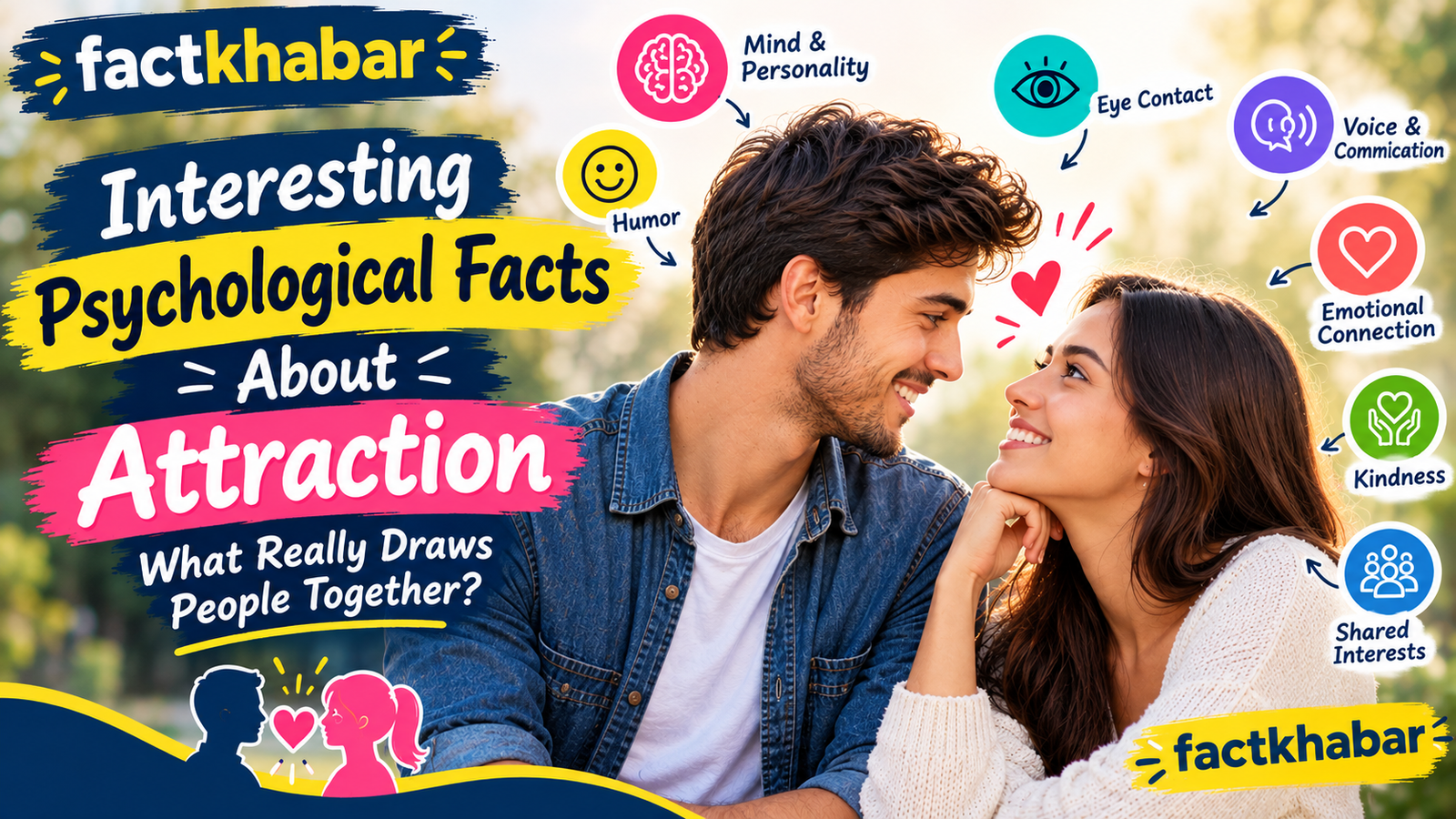
One of the most interesting things about human psychology is attraction. Sometimes we are immediately drawn to someone, and sometimes the attraction has to develop before we feel it. But why is that so? Is attraction simply about how someone looks, or do personality, behaviour, getting to know each other, emotions, and even little unconscious signs contribute?
Psychology shows attraction is far more complicated than just being physically attracted to someone. Our brains constantly process other people’s facial expressions, voices, body language, personality traits, social experiences and emotional connections when we form an impression of another person.
Here are some interesting psychological facts about attraction that may explain why people get interested in each other.
Attraction is more than just physical appearance
Physical appearance does play a part in first impressions, but it’s not the only factor that determines attraction. As people spend more time together, personality, confidence, kindness, humour, communication style, and emotional compatibility can become more important.
Someone can look plain at first, but once you get to know their personality, they can become incredibly appealing. That’s one reason attraction can change over time.
How someone treats other people can also change how attractive they look. They are more than just a body. A little kindness and empathy, a little confidence, a little positive attitude can make someone more attractive than their looks.
Familiarity Breeds Attraction
Here are some interesting psychological facts about attraction. Familiarity influences how much we like someone.
The more often you encounter a person, place, song, or other stimulus, the better you will feel about that person, place, or song. This is known as the ‘mere-exposure effect’, a term coined by psychologists.
It doesn’t mean that just because you see someone, you’re going to be attracted to them romantically. Having positive interactions with someone over and over can make a person feel more comfortable and familiar with that person, and that could lead to an increase in liking.
This helps explain why people sometimes develop crushes on classmates, coworkers, neighbours or friends after spending a lot of time around them.
People can be united by common interests
People tend to feel at ease in the company of others who have similar interests, values, experiences or attitudes.
For example, two people who share an interest in the same kind of music, films, sports, hobbies, or activities may have more chances to talk and connect. Common interests can spark organic conversations and shared experiences that can lead to bonding.
Similarity can also be in deeper areas like attitudes and values. Sometimes it is easier to communicate and feel more understanding when you have similar ideas about important things in life.
Humour matters.
A good sense of humour can make social interactions more fun. When two people laugh together, the interaction can seem more positive and relaxed.
Humour can also provide a window into personality. The way a person tells jokes, reacts to jokes, and finds humour in someone else can be a window into how they communicate and how socially aware they are.
But everyone has different senses of humour. One person’s funny is another’s not. That’s why humour can create attraction between some people and have little effect on others.
Confidence is sexy
Confidence is often associated with attraction because it can indicate a comfort with yourself and a sense of social security.
But confidence is not arrogance. Confidence is being able to say what you think, talk loudly, and feel good about yourself without having to be told you are doing well all the time. Arrogance however, can mean inflated self-regard or contempt for others.
Healthy confidence makes social interactions easier because the person appears comfortable communicating and engaging in conversations.
Eye Contact May Influence Social Bonding
Eye contact is a powerful part of communication between people. Appropriate eye contact can convey attention, interest, and engagement during conversations.
When someone listens with intent and makes natural eye contact, the other person might feel seen and understood.
However, too much eye contact can be uncomfortable. Cultural expectations and individual personality also affect the way people interpret eye contact. So don’t assume that eye contact is a guaranteed sign of romantic interest.
The Voice Can Affect Attraction
Attraction is more than simply seeing people. The human voice can also influence how people perceive each other.
Even the tone, rhythm, volume, and speaking style can affect the overall impression of someone. A calm, expressive, or pleasant voice can make a conversation more pleasant.
Interestingly, people may have different reactions to certain vocal characteristics according to their own experiences, cultural background, and personal preferences.
Body language gives subtle signals
People communicate much more than words. Facial expressions, posture, gestures, personal space, and movement can all be affected by social perceptions.
Someone who is relaxed and interested might be more approachable than someone who shuns contact all the time.
You can communicate friendliness by smiling, facing the other person while you are talking, nodding as you talk, and listening attentively. That said, body language is very context-dependent and should never be used as conclusive evidence of attraction on its own.
How to Attract with Emotional Connection
The closeness we feel can change the way we see each other.
When people open up and tell you about their experiences, and you listen and don’t judge them, and give them support, and really show that you understand, it can mean so much more to the relationship.
That’s why emotional intimacy can sometimes lead from friendship to romantic attraction. Spending time together lets people learn qualities that are not visible at the first meeting.
Kindness Makes You More Attractive
Kindness is an important quality in society. People may be drawn to a person who demonstrates kindness, compassion, tolerance, and patience.
Small habits reveal a person’s character. A person’s attitude to service workers, friends, strangers or people with nothing to offer them may affect how others see them.
Thus, attraction is partly tied to the general impression a person makes from everyday behaviour.
Positive experiences can affect attraction
Our brains automatically link people with experiences. When we regularly spend time with someone and it leads to good conversations, laughter, fun activities, or emotional support, these positive experiences can influence how we view them.
For example, when you are having fun, you might see a person often, and eventually that person might become associated with the fun.
That is not to say that attraction can be engineered. Instead, positive experiences can provide opportunities for emotional connection and familiarity.
Sometimes Mystery Feeds Curiosity
It’s only natural for people to be curious about things they don’t fully understand.
If a person reveals all they are right away, there’s less for curiosity to get hold of. But slowly getting to know someone’s character, hobbies, history, and aspirations can be a more interesting experience.
But mystery is not the same as dishonesty or deliberately playing games. Healthy attraction is normally based on real communication and mutual respect.
Attraction Might Evolve Over Time
One of the most important psychological facts about attraction is that it is not fixed.
As you get to know someone’s personality, they may become more attractive to you. But in contrast, attraction can fade if you learn behaviours or values that don’t live up to your expectations.
This shows that attraction is relative to experience and perception rather than an absolute from the first encounter.
Similarity and Differences Both Matter
Sometimes people are attracted to people who are like themselves, but differences can spark curiosity.
Two people can have different hobbies or personalities but share important values. Such differences may provide opportunities for them to learn from one another.
Two people in a healthy relationship do not have to be the same. Compatibility is usually a mix of things in common and things that are different.
- Attraction Is Quite Personal
There is no magic formula for attraction.
People are attracted to different personalities, looks, ways of communicating, values, lifestyles and behaviours. Preferences can be affected by cultural background, personal history, social environment and individual experiences.
This is why psychological research can find general patterns without being able to predict exactly who a particular person will find attractive.
Conclusion
These interesting psychology facts about attraction prove that human attraction is far more complex than simply physical appearance. People like other people for many different reasons. Familiarity, personality, humour, confidence, kindness, communication, common interests, emotional connection, good experiences.
And most importantly, attraction is individual. One man’s taste is another man’s trash. Psychological research gives us an understanding of general patterns, but the specific details of each relationship are created by individual life experiences and authentic human connection.
So knowing the psychology of attraction can tell us more than just how people get attracted to each other. It can also remind us that important connections are often made through communication, respect, emotional understanding, and time.