
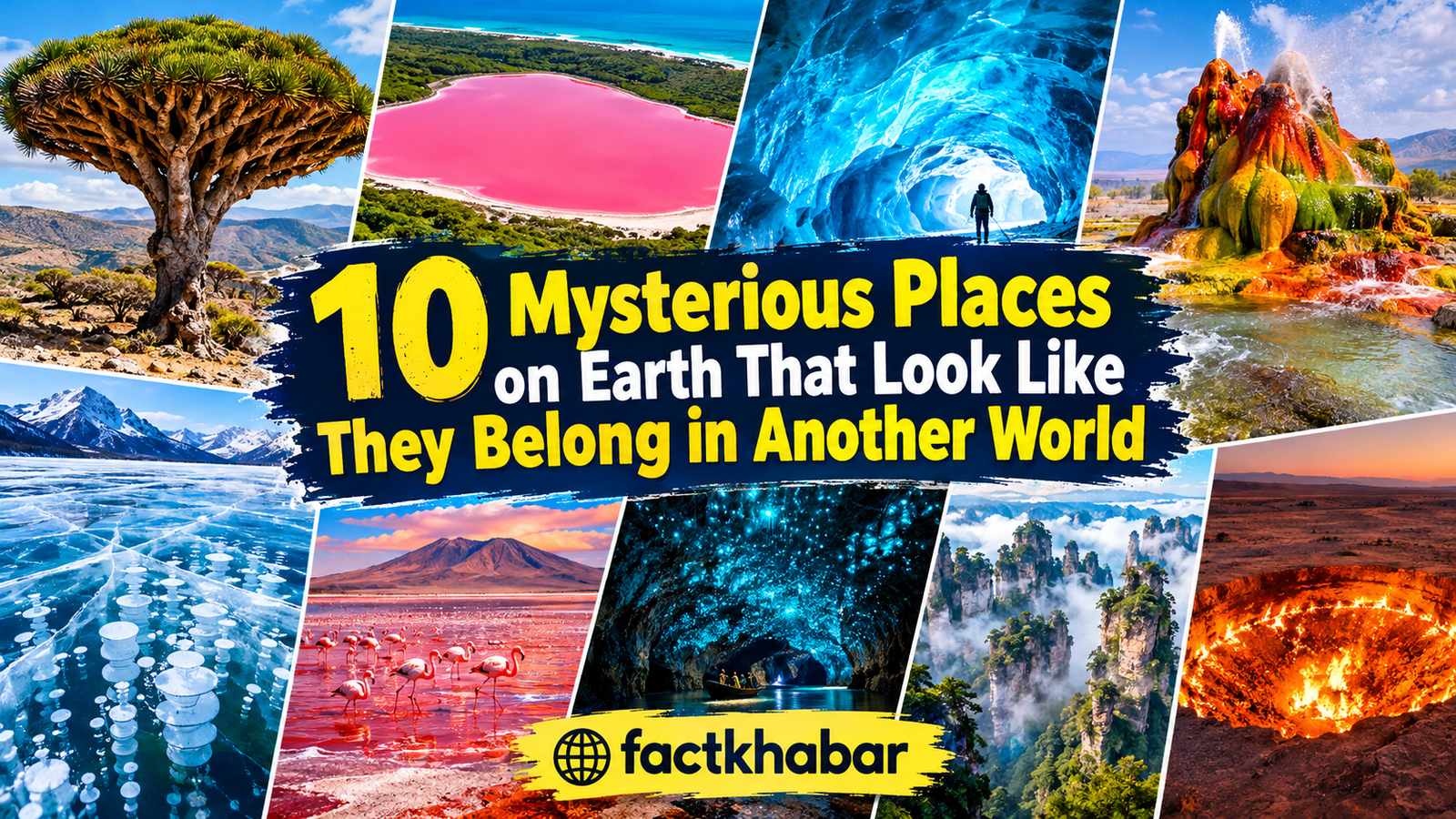
10 Mysterious Places on Earth. Our planet is full of incredible natural wonders that seem almost unbelievable. From lakes with bright pink water to caves that glow in the dark, Earth has many unusual places that look like they came straight out of a fantasy movie. Some of these destinations have fascinated scientists for years, while others attract visitors because of their extraordinary beauty and unusual natural features. What makes these places even more interesting is that many of them have scientific explanations behind their mysterious appearances. However, knowing how they formed does not make them any less amazing. In this article, we will explore 10 mysterious places around the world that look like something from a dream.
10. Dragon Blood Tree, Socotra, Yemen
The Dragon Blood Tree is one of the most unusual trees on Earth. It grows naturally on Socotra Island, which belongs to Yemen and is famous for its unique plants and wildlife. The tree has a distinctive umbrella-shaped canopy, with thick branches spreading outward to create a shape that looks almost like an enormous mushroom. Its strange appearance makes the landscape look as if it belongs to another planet. The tree gets its unusual name from the dark red resin that comes from its trunk when the bark is damaged. This red substance is commonly known as dragon’s blood. It is not actual blood, but a natural plant resin that has been used for traditional purposes, dyes, and other applications throughout history. The tree grows slowly and can survive in dry conditions, making it well adapted to Socotra’s challenging environment.
Dragon Blood Trees are especially important because they are part of a rare ecosystem found nowhere else in quite the same way. Their unusual shapes, red resin, and remarkable ability to survive in harsh conditions make them a fascinating example of nature’s creativity. Anyone interested in strange trees, unusual plants, or mysterious landscapes would find this destination truly remarkable.
9. Lake Hillier, Australia
Imagine looking at a lake and discovering that its water is bright pink instead of blue or green. This is the extraordinary sight associated with Lake Hillier in Western Australia. The lake is famous for its distinctive pink color, which creates a striking contrast with the surrounding green vegetation and the blue ocean nearby. From above, the lake can look like a giant splash of pink paint across the landscape. Scientists believe that microorganisms and other biological and chemical conditions contribute to the lake’s unusual color. Certain salt-loving microorganisms, including some types of algae and bacteria, can produce pigments that appear red or pink. However, the exact contribution of different organisms to Lake Hillier’s color is complex, and it should not be attributed to a single organism without qualification.
The lake’s high salt concentration is another important feature. Although its color makes it look almost unreal, Lake Hillier is a natural environment rather than an artificial attraction. Access to the lake and opportunities to view it depend on local conditions and tour arrangements. Its vivid appearance has made it one of Australia’s most recognizable natural wonders and an excellent example of how unusual environmental conditions can create extraordinary scenery.
8. Ice Caves, Iceland
Iceland is famous for its glaciers, volcanoes, waterfalls, and dramatic landscapes. Among its most beautiful natural features are ice caves, which form inside glaciers as water flows through cracks and tunnels in the ice. These caves can have brilliant blue walls, unusual shapes, and smooth surfaces that reflect light in remarkable ways. The blue color often seen inside an ice cave is caused by the way dense ice absorbs and scatters light. As sunlight enters the ice, many other wavelengths are absorbed more strongly, allowing blue light to become more noticeable. The result is an almost magical atmosphere that makes visitors feel as though they have stepped into a frozen fantasy world.
However, ice caves are constantly changing. Temperature fluctuations, melting water, and glacier movement can alter their shape or make them unsafe. For this reason, visitors should explore them only with qualified guides and follow local safety advice. Despite these risks, Iceland’s ice caves remain among the most extraordinary natural attractions in the world, offering a rare opportunity to see the hidden beauty of glaciers from the inside.
7. Fly Geyser, Nevada, USA
Fly Geyser is one of the strangest-looking geothermal features in the United States. Located in Nevada’s Black Rock Desert region, this colorful formation resembles a sculpture created by an artist rather than a natural feature. Its mounds are covered in vivid shades of red, green, orange, and yellow, while hot water continuously flows from openings in the formation. The geyser’s story is unusual because human activity helped bring it into existence. During the twentieth century, drilling in the area encountered geothermal water. Over time, mineral-rich water emerged and deposited layers of minerals around the openings. These deposits gradually built up into the unusual structures visible today. The colors come partly from thermophilic microorganisms that thrive in warm environments and from minerals present in the surrounding formations.
Fly Geyser demonstrates how nature can transform even an accidental discovery into something spectacular. The flowing water and colorful mineral deposits make the site look like a landscape from a science-fiction movie. Although it is a fascinating destination, access is restricted in many circumstances because the land is privately managed. Visitors should check official arrangements before planning a trip.
6. Lake Baikal, Russia
Lake Baikal, located in Siberia, Russia, is one of the world’s most remarkable freshwater lakes. It is estimated to be around 25 million years old, making it the oldest existing lake commonly recognized by scientists. It is also the deepest freshwater lake in the world, reaching a depth of approximately 1,642 meters. The lake is famous for its extraordinary water clarity and rich biodiversity. It contains many species that cannot naturally be found anywhere else, including the Baikal seal. Its enormous size and unique ecosystem have earned it an important place in global conservation efforts.
During winter, Lake Baikal can become covered with thick ice. Under suitable conditions, the frozen surface develops transparent sections, cracks, and striking patterns that make the lake look like a giant sheet of glass. Air bubbles trapped in the ice can create beautiful formations beneath the surface. These sights attract photographers and travelers who want to experience the lake’s winter scenery. Despite its beauty, the frozen lake should never be treated as automatically safe to walk on. Ice thickness can vary significantly, and cracks, currents, and changing weather conditions can create serious risks. Lake Baikal is a reminder that some of Earth’s most beautiful places are also powerful natural environments that deserve respect.
5. Lake Natron, Tanzania
Lake Natron in northern Tanzania is famous for its unusual reddish appearance and extremely alkaline water. Located in a hot, dry region near the Great Rift Valley, the lake looks dramatically different from many other lakes around the world. Depending on the season and environmental conditions, its surface can display shades of red, orange, and pink. The lake’s unusual chemistry is connected to volcanic activity in the surrounding region. Water entering the lake contains dissolved minerals and salts, and evaporation in the hot climate causes these substances to become increasingly concentrated. Some microorganisms thrive in these highly alkaline conditions and produce pigments that contribute to the lake’s vivid colors.
Lake Natron is sometimes described as a place that turns animals into stone. This is an exaggeration. The lake does not instantly transform living creatures into stone, although its caustic, alkaline water can damage animals that are not adapted to such conditions. Mineral deposits may also cover remains and create unusual-looking images. Surprisingly, Lake Natron is an important breeding area for lesser flamingos. These birds are specially adapted to feed and reproduce in the lake’s challenging environment. Their presence shows that a place that appears hostile to many forms of life can still support remarkable wildlife. Lake Natron is both a beautiful natural wonder and an important ecosystem.
4. Waitomo Glowworm Caves, New Zealand
The Waitomo Glowworm Caves on New Zealand’s North Island offer one of the most enchanting natural sights in the world. Inside the dark caves, thousands of tiny blue-green lights appear across the ceilings, creating the impression of a star-filled night sky underground. The sight is so unusual that visitors often compare it to entering a magical world. The lights are produced by glowworm larvae known as Arachnocampa luminosa, a species native to New Zealand. These tiny creatures produce light through a biological process called bioluminescence. The glow helps attract insects toward sticky silk threads that hang from the cave ceilings. When insects become trapped in these threads, the glowworms can feed on them.
The darker the cave, the more impressive the lights appear. Visitors can experience the glowworms on guided tours, and some tours include boat rides through sections of the cave system. These experiences allow people to observe the glowing ceiling while disturbing the environment as little as possible. The Waitomo Glowworm Caves demonstrate that even tiny organisms can create a spectacular natural display. Unlike artificial lighting, the glow comes from living creatures and serves a practical purpose in their life cycle. This combination of biology, darkness, and natural beauty makes the caves one of New Zealand’s most memorable attractions.
3. Abraham Lake, Canada
Abraham Lake is an artificial reservoir in Alberta, Canada, surrounded by the dramatic scenery of the Canadian Rocky Mountains. Although the lake is beautiful throughout the year, it becomes especially famous during winter, when frozen bubbles can be seen trapped beneath its clear ice. These unusual formations are mainly caused by methane gas released as organic material decomposes on the lakebed. The gas rises toward the surface, but during winter, freezing conditions can trap the bubbles at different levels beneath the ice. This creates layers of white bubbles that appear to rise from the bottom of the lake.
When sunlight passes through the clear ice, the frozen bubbles become highly visible, producing a strange and fascinating pattern. The scene can look like a collection of suspended pearls or a series of tiny planets trapped inside a frozen world. Photographers often visit during winter to capture this unusual phenomenon. However, the beauty of Abraham Lake comes with important safety concerns. Methane is flammable, and frozen lakes can contain thin ice, cracks, and other hazards. Ice conditions can change quickly, so visitors should never assume the surface is safe simply because it looks solid. The lake is a remarkable example of how ordinary natural processes can create extraordinary sights.
2. Tianzi Mountains, China
The Tianzi Mountains in China’s Hunan Province are famous for their towering stone pillars, mist-covered peaks, and dramatic landscapes. Located within the Wulingyuan Scenic Area, these mountains look so unusual that they have inspired comparisons with imaginary worlds and scenes from science-fiction films. The tall sandstone formations developed over millions of years through geological processes, including erosion and weathering. Water, wind, and other natural forces gradually shaped the rock into steep columns and narrow peaks. Some of the formations rise dramatically above the surrounding forests, creating an unforgettable view.
The weather adds another layer of mystery to the landscape. When clouds and mist move between the peaks, the stone pillars appear to float above a sea of white clouds. On clear days, visitors can see the full scale of the mountains and the lush green vegetation covering the area. The region has viewing platforms, walking paths, and cable cars that allow visitors to experience its scenery from different heights. However, conditions can change quickly, and fog may reduce visibility. The Tianzi Mountains show how geological forces can shape landscapes that appear almost impossible to believe.
1. The Door to Hell, Turkmenistan
One of the most unusual places on Earth is the Darvaza Gas Crater in Turkmenistan, commonly known as the Door to Hell. Located in the Karakum Desert, this large crater is famous for the flames that have burned inside it for decades. Against the dark desert landscape, the glowing pit looks like an enormous gateway filled with fire. The crater is associated with Soviet-era gas exploration in the early 1970s. A drilling site collapsed, creating a large depression through which natural gas escaped. The gas was reportedly ignited to reduce the release of methane, with the expectation that the fire would eventually burn out. Instead, flames continued to burn for many years.
The crater’s fiery appearance is particularly dramatic at night, when orange flames illuminate the surrounding ground. Its remote desert location adds to the atmosphere, making it one of the world’s most unusual destinations. The exact history of the site’s creation has some uncertainties, but its connection to natural gas exploration is well established. Although the name Door to Hell sounds frightening, the crater is a geological and industrial phenomenon rather than a supernatural mystery. It also highlights the environmental challenges associated with natural gas extraction and methane emissions. Visitors should follow local guidance because the crater’s edges and surrounding ground can be dangerous.
Conclusion: Earth’s Most Amazing Natural Wonders
From the unusual red resin of the Dragon Blood Tree to the glowing caves of New Zealand and the burning gas crater in Turkmenistan, our planet contains places that seem almost too extraordinary to be real. Each destination has its own story, shaped by geological forces, unusual environmental conditions, or the remarkable behavior of living organisms. Some of these places look mysterious because scientists are still studying aspects of their natural processes, while others have explanations rooted in geology, chemistry, and biology. Understanding how they formed makes them even more fascinating.
These destinations also remind us that Earth’s natural beauty is worth protecting. Climate change, pollution, tourism, and human activity can threaten delicate ecosystems, so responsible travel is essential. If you could visit just one of these incredible places, which would you choose? Share your favorite in the comments and tell us which natural wonder surprised you the most.