
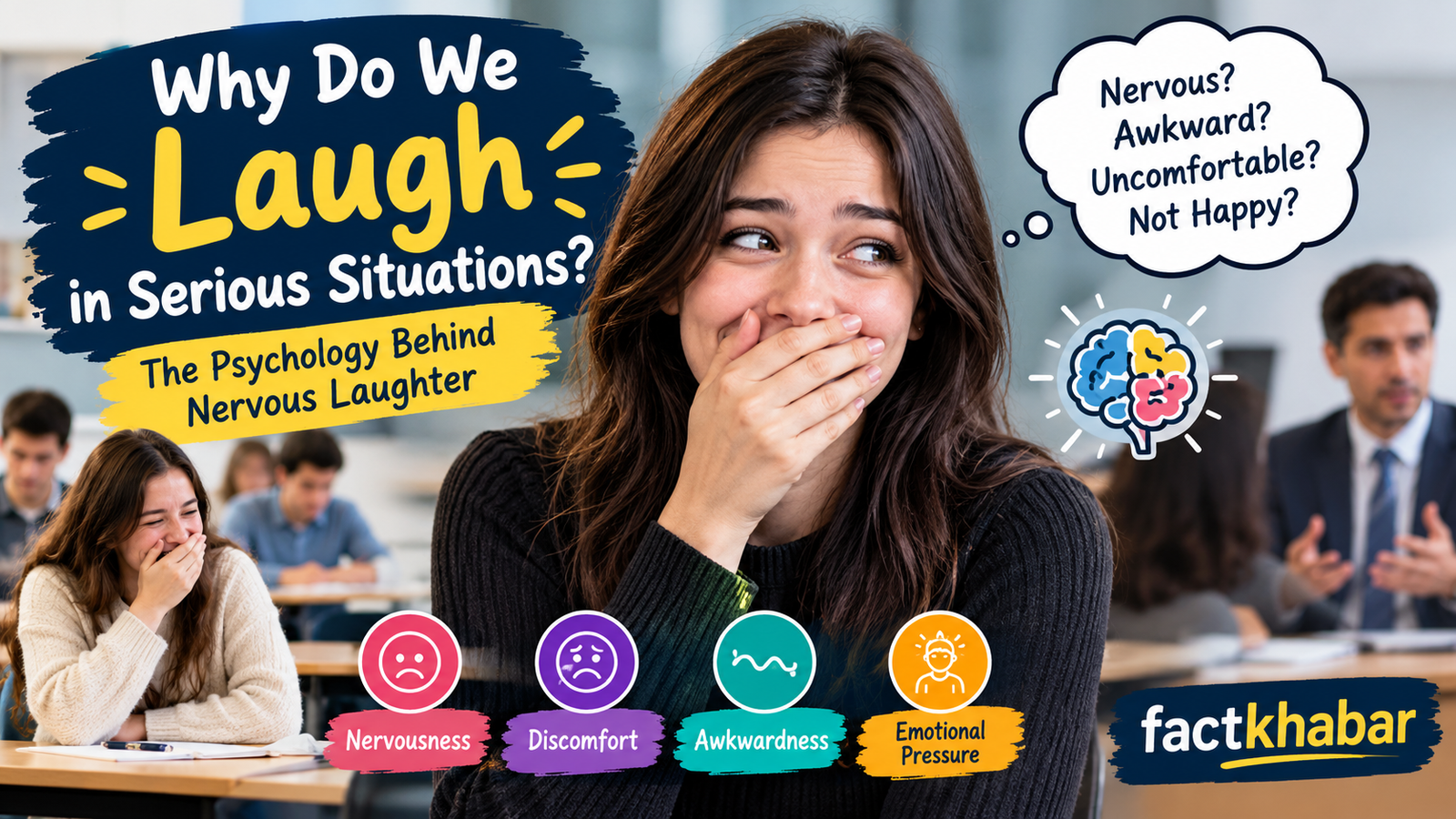
Stop Laughing: The Psychology of Emotional Control. Have you ever started laughing in a serious situation, even when you knew it was the wrong time? Perhaps you were in a classroom, attending a meeting, talking to someone seriously, or listening to something emotional, but suddenly you felt the urge to laugh. The more you tried to control it, the harder it became to stop. This experience can feel embarrassing, especially when other people misunderstand your reaction. They might think you are not taking the situation seriously, even when you genuinely care about what is happening.
The interesting thing is that laughter does not always mean happiness. Sometimes, it can be a response to nervousness, discomfort, awkwardness, or emotional pressure. Understanding why this happens can help you become more aware of your emotions and learn how to respond calmly in situations where you need to remain serious.
Why Do We Laugh in Serious Situations?
Imagine a family where a father gives some money to the mother, who places it under the bed. Later, she discovers that some of the money is missing. The father becomes angry and questions their three sons. The younger sons seriously deny taking the money, but when the eldest son is questioned, he suddenly starts laughing. Even though he says he did not take the money, everyone begins to suspect him because of his reaction.
However, the eldest son may be telling the truth. His laughter does not necessarily mean he is guilty. He might simply be nervous or uncomfortable because everyone is looking at him suspiciously. This example shows how easily people can misunderstand emotional reactions. We often judge others by their facial expressions and behavior without considering what they might actually be feeling. Stop Laughing: The Psychology of Emotional Control
The Psychology Behind Nervous Laughter
Our brains do more than simply experience emotions. They also help us respond to different situations. When everything is normal, we may express our feelings without thinking much about them. However, when we experience stress or emotional pressure, our reactions can become difficult to manage. For example, one part of your mind may recognize that a situation is serious and that you should respond carefully. At the same time, another part of you may feel nervous, awkward, or overwhelmed. These conflicting feelings can create emotional tension, and your body may respond in unexpected ways.
Different people react to pressure differently. Some become quiet, some start crying, and others may laugh even when they do not feel happy. In such situations, laughter can sometimes act as an automatic response to nervousness or discomfort. It does not automatically mean that a person is insensitive or does not care about the feelings of others. Understanding this difference is important because it helps us avoid judging ourselves and other people too quickly. Instead of assuming that laughter always expresses happiness, we can consider the situation and the emotions that might be behind it.
Why Is It So Difficult to Stop Laughing?
One of the most frustrating experiences is trying to stop laughing and discovering that your laughter becomes even stronger. You might tell yourself repeatedly, “Don’t laugh, stay serious, and control yourself.” Unfortunately, this constant effort can sometimes make the situation worse. This happens because your attention becomes focused on the very thing you are trying to avoid. The more you monitor whether you are laughing, the more aware you become of the urge to laugh. Instead of allowing your attention to move naturally, your mind keeps returning to the same thought.
Think about someone telling you not to imagine a pink elephant. Even if you were not thinking about one before, the instruction immediately brings the image into your mind. A similar pattern can occur when you repeatedly tell yourself not to laugh. Your attention stays fixed on laughter, making it harder to shift your focus elsewhere. This does not mean that controlling laughter is impossible. It means that fighting an unwanted reaction with constant pressure is not always the most helpful approach. Learning to understand your emotions and redirecting your attention can be more useful than repeatedly forcing yourself to stop.
Three Psychological Techniques to Control Nervous Laughter
Learning to manage nervous laughter begins with understanding what you are experiencing. Rather than blaming yourself for reacting unexpectedly, you can practice simple techniques that may help you feel calmer and more in control.
1. Identify and Understand Your Emotions
The first technique is to identify the emotion you are experiencing instead of focusing only on stopping the laughter. In psychology, this process is often called emotion labeling. It involves recognizing and naming what you are feeling. When laughter appears in a serious situation, pause for a moment and ask yourself what is happening inside your mind. Are you feeling nervous? Are you uncomfortable because everyone is looking at you? Do you feel awkward, embarrassed, or pressured to behave in a particular way?
Sometimes, people try to suppress their laughter without understanding the emotion behind it. However, identifying the feeling can help them become more aware of their reaction. Once you recognize that you are nervous or uncomfortable, you can respond to that feeling rather than treating laughter as the only problem. For example, if you are sitting in a meeting and suddenly feel like laughing, silently acknowledge the emotion by telling yourself, “I am feeling nervous right now.” You do not need to criticize yourself or become frustrated. Simply recognizing the feeling can help you approach the situation with greater awareness. With practice, this habit may make it easier to notice emotional triggers and respond more thoughtfully instead of reacting automatically.
2. Shift Your Attention Away From Laughter
The second technique is to redirect your attention. When you are trying hard not to laugh, your mind may become completely focused on controlling your facial expressions and suppressing the urge. This can make the feeling seem even stronger. Instead of repeatedly telling yourself not to laugh, give your attention something else to do. The goal is not to distract yourself randomly but to focus on something simple and connected to the present moment. For example, notice how your feet feel against the floor. Pay attention to the pressure of your shoes or gently press your fingers together and observe the sensation. You can also quietly count your breaths and notice the rhythm of your breathing.
These small actions may help you move your attention away from the emotional reaction and toward a physical sensation. When your mind is no longer monitoring laughter every second, the urge may gradually become easier to manage. Imagine that you are attending a serious conversation and feel laughter building up. Instead of thinking, “I must not laugh,” focus on your feet touching the ground and take a few gentle, steady breaths. Allow yourself to settle into the present moment rather than struggling against the feeling. The important lesson is that emotional control does not always come from applying more force. Sometimes, changing the direction of your attention is a more helpful strategy.
3. Look at the Situation From an Outside Perspective
The third technique involves changing the way you view the situation. When you feel nervous about laughing, your attention often turns toward yourself. You may start thinking about what other people will say, whether they are watching you, or whether they will misunderstand your behavior. These thoughts can increase the pressure you already feel. The more you worry about your reaction, the more difficult it may become to remain calm. One helpful approach is to imagine observing the situation from the outside, as if you were watching a scene rather than being at the center of it. Instead of asking, “What will everyone think of me if I laugh?” try to view the moment more neutrally.
For example, imagine that you are sitting in a meeting and suddenly feel uncomfortable. Rather than focusing entirely on yourself, consider the wider situation. People are discussing a topic, everyone has their own thoughts, and you are simply experiencing a moment of nervousness. You do not need to turn that moment into a judgment about your personality. This change in perspective may help reduce the emotional intensity of the experience. It allows you to create some mental distance between yourself and your immediate reaction, making it easier to respond thoughtfully. The goal is not to pretend that your emotions do not exist. It is to recognize them without allowing them to control your entire attention.
How to Practise Emotional Control in Everyday Life
Emotional control is not about becoming a person who never laughs, cries, feels nervous, or experiences anger. Everyone has emotions, and unexpected reactions can happen to anyone. The goal is to understand your feelings and develop healthier ways to respond when a situation becomes uncomfortable. Start by noticing the situations in which nervous laughter usually appears. You might experience it when someone questions you, when you feel embarrassed, or when you are expected to remain serious. Recognizing these patterns can help you understand what triggers your reaction.
When the urge to laugh appears, avoid immediately criticizing yourself. Instead, acknowledge the feeling, gently redirect your attention, and try to view the situation from a calmer perspective. These techniques may not work perfectly every time, but regular practice can help you become more familiar with your emotional responses. It is also important to remember that progress takes time. You may manage your laughter successfully in one situation and struggle with it in another. That does not mean you have failed. Every experience gives you another opportunity to understand yourself better. If uncontrollable laughter happens frequently, causes significant distress, or appears alongside other unusual symptoms, consider discussing it with a qualified healthcare professional. There can be different reasons for involuntary laughter, and persistent symptoms deserve appropriate attention.
The Connection Between Emotional Control and Confidence
Confidence is not simply the ability to appear calm in every situation. It also involves understanding yourself and responding to difficulties without immediately assuming that something is wrong with you. When people laugh nervously, they may worry that others will consider them immature, careless, or disrespectful. This fear can create even more pressure, making the original reaction harder to manage.
By understanding the psychology of nervous laughter, you can begin to separate your emotional response from your character. Laughing at an inappropriate moment does not automatically mean that you lack respect or empathy. What matters is how you understand the situation, recognize its impact on others, and learn to respond more appropriately. As you become more aware of your emotions, you may also find it easier to handle other challenging feelings, including embarrassment, frustration, and anger. Emotional awareness can help you pause before reacting and make more thoughtful decisions.
Conclusion
The psychology of emotional control teaches us that our reactions are not always as simple as they appear. Laughing in a serious situation does not necessarily mean that we are happy or that we do not care. Sometimes, nervousness, discomfort, and emotional pressure can contribute to an unexpected response.
The three techniques discussed in this article can help you approach nervous laughter more thoughtfully. First, identify the emotion you are experiencing. Second, shift your attention toward a simple physical sensation or the present moment. Third, try viewing the situation from an outside perspective instead of judging yourself continuously.
Remember that emotional control is not about fighting every feeling or demanding perfection from yourself. It is about understanding what you feel, becoming aware of your reactions, and learning how to respond with greater calmness and confidence. With patience and practice, you can develop a better understanding of your emotions and handle difficult social situations more comfortably.